

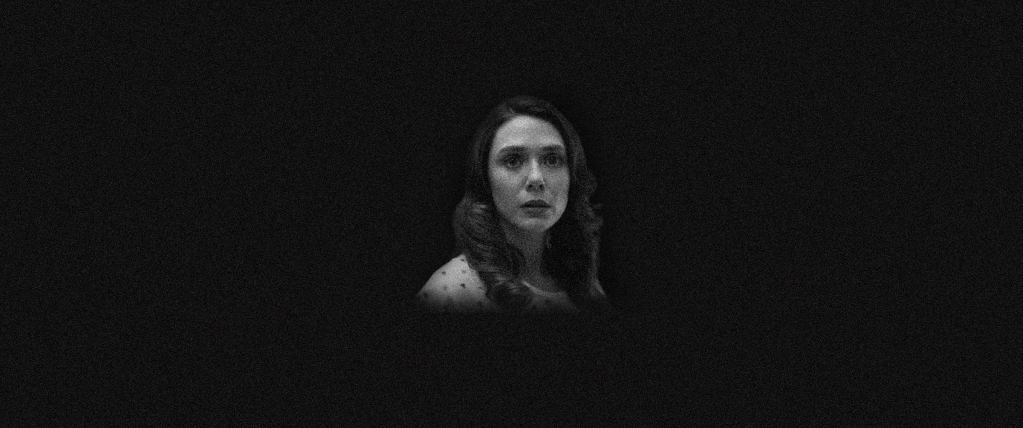
Independent filmmakers face brutal reality: buyers reject 80% of films before watching a single frame—killed by weak packaging. The trailer is your make-or-break moment. Here’s the neuroscience behind why Eternity‘s trailer works.
Hook Architecture
Buyers watch 200+ trailers per festival cycle. The first 3 seconds determine if they keep watching or skip. A hook that neurologically prevents skipping is what separates acquired films from rejected ones.
Here’s how Eternity locks attention in the opening seconds:
Sensory mismatch triggers attention lock. When Apple and A24 logos appear in silence but train sounds play underneath, the brain detects incongruence between static visuals and kinetic audio. This cognitive tension demands resolution—the viewer cannot look away until the mismatch resolves, which happens exactly when your story begins. Question implanted, attention secured.
Tension Escalation
Buyers need proof your film sustains engagement. A trailer that builds momentum demonstrates the film won’t lose audiences mid-runtime—a critical sales concern for distributors betting on audience retention.
Watch how the middle section builds unstoppable forward momentum:
Progressive arousal conditioning hijacks the autonomic nervous system. The ethereal opening—beatless, atmospheric—establishes baseline calm. Each new sequence adds tonal layers: synthesizers, voices, drum beats. The brain detects steady increase in auditory density and rhythm, signaling rising stakes. Each layer reinforces forward momentum, training the nervous system to expect escalation. Dopamine never plateaus. Disengagement becomes neurologically difficult.
Memory Anchoring
Post-screening, buyers compare dozens of films. The ones they remember get deals. A thematic anchor ensures your film stays top-of-mind during decision meetings 48 hours later.
Watch the closing sequence plant a question that won’t let go:
“Have you chosen your eternity?” creates an open cognitive loop. The unanswered question triggers the brain’s pattern-completion mechanism—it activates but cannot close. This thematic anchor now occupies mental real estate, waiting for resolution only the full film can provide. The rapid montage reinforces visual motifs while the final title card cements recall. The viewer subconsciously seeks closure.
Weak packaging doesn’t hurt your film—it kills it on sight. Buyers don’t “give chances.” Amateur trailers, vague lookbooks, and generic artwork are read as warnings of poor market instincts and low audience pull. In a pile of hundreds, anything that doesn’t signal precision and intent is discarded instantly. Eternity survives because its trailer doesn’t suggest market readiness—it demonstrates it.
 MAX-Q Studio